
Insights
One elephant at a time: the workplace scene you already recognize, the evidence that puts a number on it, and what it takes to move it out of the room.
Every number on these pages carries its source, and every source was vetted before it was quoted. How we do that: our methodology.
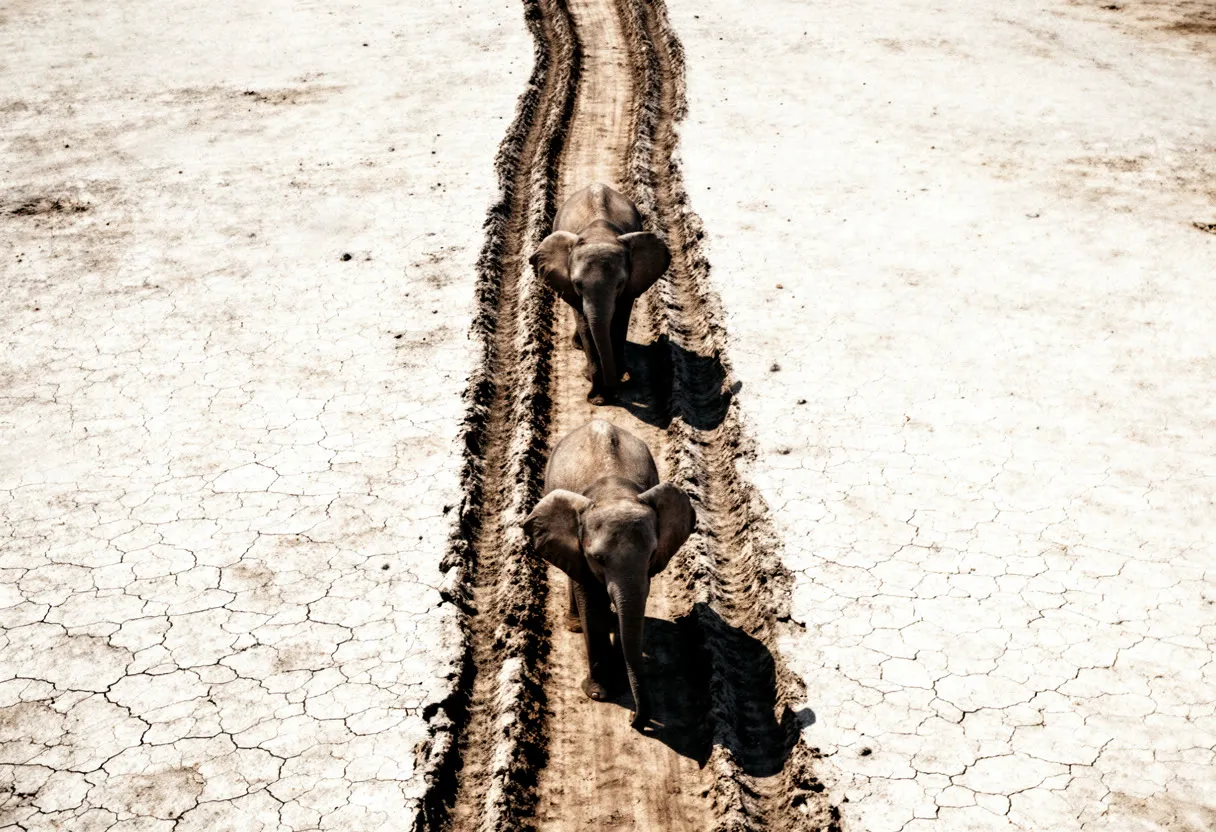
Paid to copy-paste
57% of U.S. work hours could technically be automated with technology that already exists. Most organizations automate the wrong workflow first.

The dashboard that already existed
The average knowledge worker spends 209 hours a year on work already done. Duplication is a search problem, not a discipline problem.

The answer that arrived before the question
78% of business leaders say the decision comes first and the data is found afterwards. What that habit costs is the evidence function itself.

The project that worked and changed nothing
RAND ranks misunderstanding the problem as the #1 root cause of AI project failure. The tell is a project that works and changes nothing.

Nobody can say how many customers we have
More than one organization in four estimates poor data quality costs it $5M a year. The bill is never invoiced, which is why it survives.

The two teams that have never spoken
A quarter of team time goes to searching for answers. At a silo boundary the search is social, not technical — and the boundary is measurable.

The two weeks' notice
Some of what a role runs on exists in exactly one head. Nobody hoarded it — the organization rewarded heroics and never funded the writing down.

The tool nobody approved and everybody uses
78% of people who use AI at work bring their own tools. Treated as evidence rather than misconduct, that is a free and very precise demand signal.

The demo everybody loved
46% of AI proofs-of-concept are scrapped before production. The number to worry about is not how many were scrapped — it is how many worked first.

That's what it gave me
Across 936 real AI-assisted tasks, the more workers trusted the tool the less critical thinking they reported. The mechanism is confidence, not laziness.
Which elephants are in your room?
Map it, prove it small, scale what earns it. The conversation starts wherever it costs you most.